
Appraisal Institute Leaders Discuss Fair, Evidence-Based Valuation Enforcement with HUD
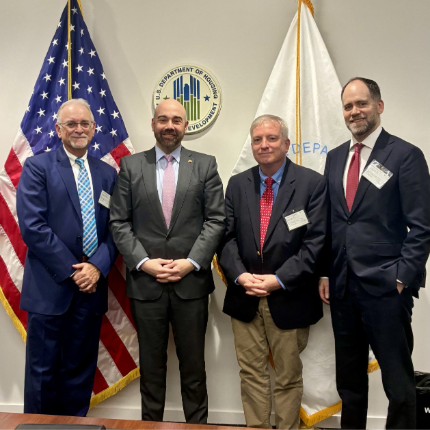 Appraisal Institute leaders met this week with senior officials at the U.S. Department of Housing and Urban Development's Office of Fair Housing and Equal Opportunity for a candid and constructive discussion about valuation policy, fair housing enforcement, and the role of appraisers in the housing finance system.
The meeting reinforced several issues central to appraisers, the valuation profession, and the public trust. Appraisal Institute leaders emphasized that bias has no place in professional valuation and reaffirmed its support for fair housing, strong education, and high professional standards. The organization also underscored that allegations involving appraisers must be evaluated fairly and based on evidence, sound methodology, and the facts of each assignment.
For several years, many appraisers have expressed concern that the profession has been judged by broad assumptions rather than by facts. Appraisal Institute leaders noted that some valuation bias matters remained unresolved for years, even after career U.S. Department of Housing and Urban Development (HUD) staff reportedly concluded that the evidence did not support moving forward. Those delays created uncertainty and reinforced a central advocacy principle: federal enforcement resources should focus on claims supported by objective evidence.
Appraisal Institute leaders were encouraged by what appeared to be a significant shift in approach. HUD's current leadership emphasized partnership, engagement, and problem-solving rather than enforcement for its own sake, suggesting a desire to work with appraisers and recognize their role in supporting credible, independent valuation services.
The conversation also addressed the use of federal resources. HUD officials indicated that federal grant funding should not be used to unfairly stigmatize or target an entire profession. Appraisal Institute leaders welcomed the message that future efforts should focus on education, compliance, and evidence-based enforcement rather than broad messaging that casts suspicion on appraisers.
Another positive takeaway was HUD's stated commitment to enforcing the Fair Housing Act and Civil Rights Act according to the law as written. The discussion reflected a renewed focus on evidence, intent, due process, and the specific facts of individual cases. HUD also indicated that it is reviewing policies and practices to ensure they remain consistent with statutory authority and evidentiary standards.
The meeting reinforced the need for a regulatory environment that recognizes appraiser independence, respects professional expertise, and holds all parties to fair, evidence-based standards.
The Appraisal Institute's advocacy continues to defend appraisers while supporting fairness and accountability. The profession can support fair housing and due process at the same time, promote accountability while insisting that facts and data guide the conversation, and uphold professional standards while ensuring fair and consistent enforcement.
The discussion also demonstrated why Appraisal Institute's advocacy work matters. When valuation professionals have a seat at the table, policymakers and regulators hear directly from those who understand the real-world consequences of valuation policy. The meeting represents a positive step toward a more balanced and constructive discussion about valuation enforcement.
The Appraisal Institute will continue to advocate for appraisers with clarity, professionalism, and respect while supporting a valuation system that serves the public with independence, integrity, and trust.