
Appraisal Waiver Rates in a Post-Pandemic World

In this issue:
- Appraisal waivers in today’s market: New data post-pandemic
- ROV requests: Learn best practices and tactics from experts
- Conservation valuation: Appraisal methodology in the spotlight
- Membership benefits: Exclusive AI member discounts available
Insights
Appraisal Waiver Rates Hold Steady but Below Pandemic Peaks
Appraisal waivers remain present in the mortgage market, but new data show their use in purchase lending has settled far below the highs reached during the pandemic. According to the AEI Housing Center’s June 2025 update, the combined share of appraisal waivers across Fannie Mae and Freddie Mac stood at 16% of all loans a one-point dip from May and down dramatically from the March 2021 peak of nearly 50%.
Freddie Still Leads in Purchase Waivers
Freddie Mac continues to allow more purchase loans to close without a full appraisal. In June, 17.1% of Freddie Mac purchase loans used a waiver, with another 1.6% relying on its data-collection alternative, ACE+PDR. Together, nearly one in five Freddie purchase loans bypassed a traditional appraisal.
Fannie’s Expansion Fuels Modest Uptick
Fannie Mae’s purchase waiver rate was lower, at 11.5%, with another 2.0% using Value Acceptance + Property Data (VA+PD) and 0.3% using the “value” version of VA+PD. However, the impact of Fannie’s Q1 2025 expansion to 80–90% CLTV purchase loans is already visible. About 15% of these higher-LTV loans used a waiver in June, compared to just 2% in February. This rapid growth suggests lenders are beginning to take advantage of the broader eligibility window.
Low Uptake of Property Data and Hybrid Alternatives
While both GSEs introduced property data collection programs ACE+PDR at Freddie and VA+PD at Fannie their use remains limited. In June, these alternatives represented just 1–2% of purchase loans at each enterprise. Despite regulator interest in these “hybrid” models, adoption has been slow. For lenders, they introduce added operational complexity, while for borrowers, they can add cost without the clear benefit of a traditional appraisal. The result is that these programs have not replaced the decline in waivers and remain only a small fraction of overall purchase originations.
Implications for Appraisers
For appraisers, the June data confirm that purchase appraisal waivers remain part of the lending process but have contracted significantly since their peak. Freddie Mac continues to rely more heavily on waivers, while Fannie Mae’s higher-LTV expansion could gradually expand usage. At the same time, the low adoption of property-data alternatives and hybrids underscores the enduring reliance on full appraisals in mortgage lending.
As Scott DiBiasio, Director of Government Affairs at the Appraisal Institute, noted: “The limited market acceptance of property data collections and hybrid models underscores what appraisers have long said these alternatives don’t deliver the same value, reliability, or consumer protection as a full appraisal. The June numbers reinforce the need for transparency and thoughtful oversight of GSE waiver and hybrid programs.”
Get Ready to Strike a New Chord in Valuation!
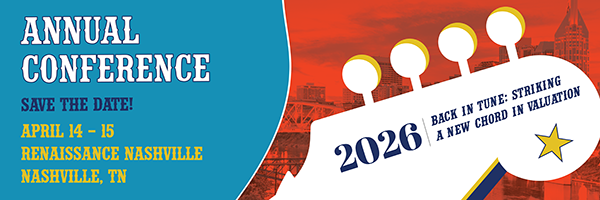
The Appraisal Institute’s 2026 Annual Conference is headed to Nashville! This year’s theme, Back in Tune: Striking a New Chord in Valuation, celebrates innovation, collaboration, and the evolving landscape of the appraisal profession.
Registration opens September 1, 2025—mark your calendar and get ready to join us in Music City.
Showcase Your Brand
Partner with us as a sponsor or exhibitor to connect with industry leaders and decision-makers. View the Prospectus to see how you can stand out at the 2026 Annual Conference.
Your Benefits
Membership Discounts for Your Company's Employees!
Support your employees’ professional growth by enrolling in the Appraisal Institute’s Group Member Program. Designed for employers of eligible professionals, this program offers a 10% discount on national dues for all participating employees. It’s a simple way to invest in your team’s development while connecting them to valuable resources, education, and a nationwide network of valuation professionals.
Eligibility Requirements
To qualify for the Appraisal Institute Group Member Program, your firm must:
- Employ at least five individualswho are current:
- Designated Members
- Candidates for Designation
- Associate Members
- Affiliate Members.
- Include a minimum of five eligible employees in the program.
- Pay all participating employees' dues directly to the Appraisal Institute by the invoice due date.
Note: Firms that do not pay the full invoice on time will lose the discount for that year’s dues cycle.
Trending Topics Thursdays:
Sign up for our next free webinar

Handling Reconsideration of Value Requests: Best Practices from the Field
September 18, 2025
Reconsideration of Value (ROV) requests are becoming more common as consumers, lenders, and regulators look for greater transparency and accountability in the appraisal process. This Trending Topics Thursday webinar will bring together perspectives from Fannie Mae and practicing appraisers to help clarify how ROVs work in practice, what lenders are asking for, and how appraisers can respond while upholding professional standards.
Rachel Beam of Fannie Mae will provide an overview of the GSE’s approach to ROVs, including recent guidance and expectations for lenders. Megan Judd, SRA, AI-RRS, will share insights from her workshop on consumer appraisal appeals, offering practical guidance for appraisers facing ROV requests in the field.
Join us for this timely discussion to better understand the evolving ROV landscape and what it means for your work.
Learning Objectives
- Understand current Fannie Mae guidance and expectations on Reconsideration of Value.
- Explore practical strategies for appraisers responding to ROV requests.
- Examine consumer and lender perspectives driving the increase in ROV activity.
- Identify best practices that protect both consumers and appraisers while maintaining public trust.
Advocacy Updates
Tax Court Decisions Reinforce Scrutiny of Conservation Easement Valuations
In two recent rulings, the U.S. Tax Court once again signaled that inflated conservation easement valuations will not pass muster. The Ranch Springs (Ranch Springs, LLC v. Commissioner, 164 TC 2025-6) and Beaverdam Creek Holdings (Beaverdam Creek Holdings v. Commissioner TC Memo 2025-53) cases both centered on charitable deductions tied to land conservation, and in each, the court found the taxpayer’s claimed values to be dramatically overstated.
For appraisers, the opinions serve as a stark reminder of the importance of credible methodology, defensible assumptions, and strict adherence to market evidence.
In Ranch Springs, decided in late March, the court examined a 452-acre tract in the Texas Hill Country. The owners claimed a $15.4 million deduction, supported by an appraisal premised on the property’s supposed residential development potential. But the land was rugged, lacked infrastructure, and was ill-suited to large-scale housing. The court rejected speculative projections and instead relied on comparable sales of ranchland with conservation restrictions as a more realistic indicator of value. The deduction was reduced to $1.2 million, and a 20 percent penalty for substantial misstatement was upheld.
The Beaverdam case, decided in early June, involved an 85-acre former granite quarry in Oglethorpe County, Georgia. Investors claimed nearly $22 million in tax deductions after donating a conservation easement on the property. Their experts based the valuation on discounted cash flow models that assumed quarry operations could somehow be restarted profitably. The court found those assumptions unrealistic, especially given the site’s history of abandonment and market conditions for stone. Instead, the IRS’s use of comparable sales of similar quarry lands carried the day. The easement’s true value, the court held, was only about $193,000. To underscore the point, the court also imposed the maximum 40 percent penalty for gross valuation misstatement.
Taken together, these cases highlight a pattern: when taxpayers and their advisors stretch to justify inflated values, the Tax Court will peel back the layers and focus squarely on market realities. For appraisers, the message is clear. Conservation easement assignments demand rigorous analysis, well-supported highest-and-best-use conclusions, and methodologies that reflect how the market actually functions.
Discounted cash flow models and “development potential” scenarios may sometimes play a role, but only if they are grounded in facts and data, not wishful thinking. For the profession, these rulings reinforce the critical role appraisers play in maintaining credibility and integrity in conservation transactions. In an environment where syndicated easements remain under scrutiny from Congress, the IRS, and the courts, appraisers must approach such assignments with caution, diligence, and a commitment to professional standards.
Real Estate Horizons
Stay updated and check out links to the latest major real estate industry stories!
More Opportunities to Learn
Search the latest educational offerings! Find National and Chapter-sponsored classroom, synchronous, and online opportunities.
Your Community
Submit your 2026 volunteer interest NOW!
Still undecided about expressing interest? It’s not too late! Volunteering has real benefits. According to research, 92% of volunteers say it improves their professional skills, and 76% report it has helped expand their network. Most importantly, it’s a rewarding way to give back to the profession!
If you’d like to be considered for a seat on the 2026 Appraisal Institute Committee complete the Leadership Resource Registry (LRR) by August 31, 2025 – even if you’re currently serving and your term ends this year.
- Step 1: Log in and click “+Add Volunteer Selections” to indicate where you’d like to serve (National, Region, or Chapter)
- Step 2: Highlight your strengths using the “Additional Information” section. Let us know where you want to serve and how you can best contribute to the future of AI.
- Step 3: Update your member profile, including demographic details, to help us build diverse and well-rounded leadership teams.
Want to serve closer to home?
Explore leadership opportunities in your local chapter! Visit our new Chapter Directory to contact your chapter and learn how you can get involved and make a difference locally.
Pathways to Success Scholarship
Applications for 3rd Quarter 2025 are open through September 12th, 2025.
Applicants must first complete the PAREA readiness checklist to confirm eligibility for the Scholarship. Click here to start your readiness checklist.
The Appraisal Foundation Pathways to Success Scholarship, funded by The Appraisal Foundation, covers 100% of enrollment costs for any AQB-approved PAREA program, including the Appraisal Institute’s Licensed Residential and Certified Residential PAREA Programs. This scholarship is designed to support aspiring appraisers who have completed the prerequisite education in their state where PAREA is approved.
The application for the Licensed Residential Pathways to Success Scholarship is available here.
Until Next week
Team Appraisal Institute